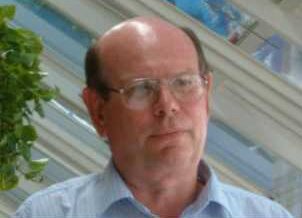
This is a very personal post, reporting on my own recent
reports on three aspects of my health: my eyes, my heart and my other affliction,
leukaemia.
I am writing this partly to celebrate but also to
motivate any newly diagnosed type 2 diabetics, shocked
and scared, who have been warned by their doctors of the inevitability of
their diabetes progressing to complications. I suppose some doctors feel they need to do that to scare new people into making lifestyle changes, but too often I find dire predictions of long term complications or heart attacks lead to loss of hope. That can lead to a 'why bother' mentality.
Please, do not give up. I know managing type 2 diabetes can be bloody inconvenient. You will have to make some annoying changes to your life such as pricking holes in yourself, adding some activity to your day, forever watching what you eat and drink and possibly taking meds and insulin.
Let me assure you: taking control of your blood glucose levels is worth the trouble. I am just one example of many I read on the better diabetes forums where pro-active type 2s are learning how to take control.
Possibly my continuing story will give you hope.
I was first diagnosed with leukaemia and type 2 diabetes in 2002
at the age of 55. I discovered early I could do nothing at all about the
leukaemia; for that reason I concentrated on beating the diabetes. I was thirsty for knowledge. For the
first couple of years I spent a lot of time learning from many wise people, mostly on usenet. Some
were medical professionals but most were experienced diabetics. I learned
something from all of them, even if the main thing I learned was how to tell
good advice from bad because, unfortunately, a lot of it was bad. I still
believe the best advice was Jennifer’s Test, Test, Test: “Use your body as a science experiment.”
I tested and experimented to find what worked for me. On usenet over the next couple of years I gradually changed from reader and student to lay advisor, passing on information based on my experience. In 2004 I joined some online forums. In 2006 I started this blog.
Eventually I wrote a
book based on my experience to help any newly diagnosed people who might not be computer-savvy. Of course, as my suggestions for good type 2 management
differ significantly from the mainstream there will always be critics. In part this is a response to the critics, describing the results of practising what I
preached for the past decade.
Motivation
We each must find our own motivation for maintaining the discipline. For me, it is my sight. Since the day I first learned about the possible
complications of diabetes my over-riding motivation has been my vision. I came
to accept the possibility of death and I certainly don't want to lose limbs from
neuropathy or kidneys from nephropathy, but the thought of living in darkness
scared me silly. I have tremendous respect and admiration for vision-impaired people
who successfully live with that daily. But I do not want to join them. I am a
reader of books, an appreciator of beauty, a user of computers and above all I want to see my
grand-daughter’s joy as she grows and learns.
The tests used by doctors to monitor our diabetes such as HbA1c, fasting blood
glucose and post-prandial blood glucose are all important but they are really
only surface indicators. I use those indicators to set my goals, but they don't directly alert me to dying nerves or optic cells. The acid test is whether complications eventually appear as the years pass.
Limbs and Kidneys
So far neither blood tests nor physical symptoms, including filament tests by my podiatrist, have
indicated any signs of neuropathy or nephropathy. I am hopeful that will continue.
Eyes
I had some good news last month. It is
over thirteen years since diagnosis and I had not seen the ophthalmologist since
2010. I had a good report then after a scare in 2006 when he discovered minor
scars from healed retinopathy. The scars had disappeared by then. This recent visit was
almost identical to that 2010 consultation.
The waiting room was packed. After various eyesight checks on
new strange machines by the assistant, then the anaesthetic drops, followed by
the dilation drops, then another wait, then more tests on machines, I eventually
saw the ophthalmologist. He did a very thorough inspection. He warned me that
as I age (I am now 68) I may start developing cataracts but at this stage I
had no problems apart from inevitably getting older. I wanted reassurance so I asked
specifically about retinopathy, macular degeneration and glaucoma as there is
some family history of the latter. He re-inspected carefully. He expressed no
concern and no evidence of past damage. Then he complimented me on my "superb diabetes control with respect to eye health". I cannot express in the written word how happy that made me
feel. Is there a cloud ten above cloud nine? At his request we then spent a few minutes of his valuable time discussing the Test, Review, Adjust technique.
OK, that covers the ‘opathies. None at all. But there is
another lurking danger for diabetics: the heart.
Heart.
I dropped Lipitor ten years ago; the more I read about statins the less I am convinced of my need for one. My doctor has been
polite and patient with me when I have consistently refused a statin for the
past nine years despite high cholesterol by official standards. My HDL and
triglycerides are fine but my LDL is very high. He suggests that may be because of my low-blood-glucose-spike
(which many interpret as low-carb) way of eating. He strongly recommended I
have a stress echocardiography accompanied by ultrasound of my heart, mainly to
reassure him I am not going to keel over tomorrow. I had those
tests last September. First, the gooey preparation and the ultrasound, twisting to awkward positions. Uncomfortable but not painful. Then walking faster and faster on the treadmill, with wires hanging off me, having problems reaching the heart rate he wanted. Eventually we got there. As I cooled down it was fascinating seeing the movies of my own heart
pumping away on the playback screen of the ultrasound.
The
cardiologist was very thorough and pleased with the results. It seems my heart and vascular system are in
fine shape. No problems at all. I will
continue to refuse the statin and eat low-carb, moderate fat, for good blood
glucose levels. I no longer care at all what my LDL is.
Leukaemia
Finally, although I would like to, I cannot forget my Chronic Lymphocytic Leukaemia sitting in the background like the Sword of Damocles. I make no
claims about my diet or lifestyle for that. I’m just lucky I suppose. All of my
indicators have improved over the years until almost all are in normal range. I
still have hypogammaglobulinemia associated with the CLL but one of the indicators for that, IgM,
has crept back into normal range. The IgG and IgA are still low, but oddly I
don’t seem to be catching anything despite wandering the far corners of the world since diagnosis. I saw the haematologist quarterly at first, then every four months, then every six, now I waste his time annually.
The haematologist, ophthalmologist, podiatrist (who displays my book at reception and has sold several copies) and my General
Practitioner tell me to keep doing what I’m doing.
That sounds like good advice to me. I will heed it.
Cheers, Alan
Everything in Moderation - Except Laughter